Market Access is Earned Every Day
As global agricultural trade continues to evolve, one reality remains unchanged: market access depends on maintaining compliance with importing country requirements.
Whether exporting fresh potatoes to Mexico, alfalfa and forage products to China, citrus to Asia, or specialty crops to emerging markets, exporters are operating in an environment where phytosanitary requirements, traceability expectations, and regulatory oversight remain critical components of international trade.
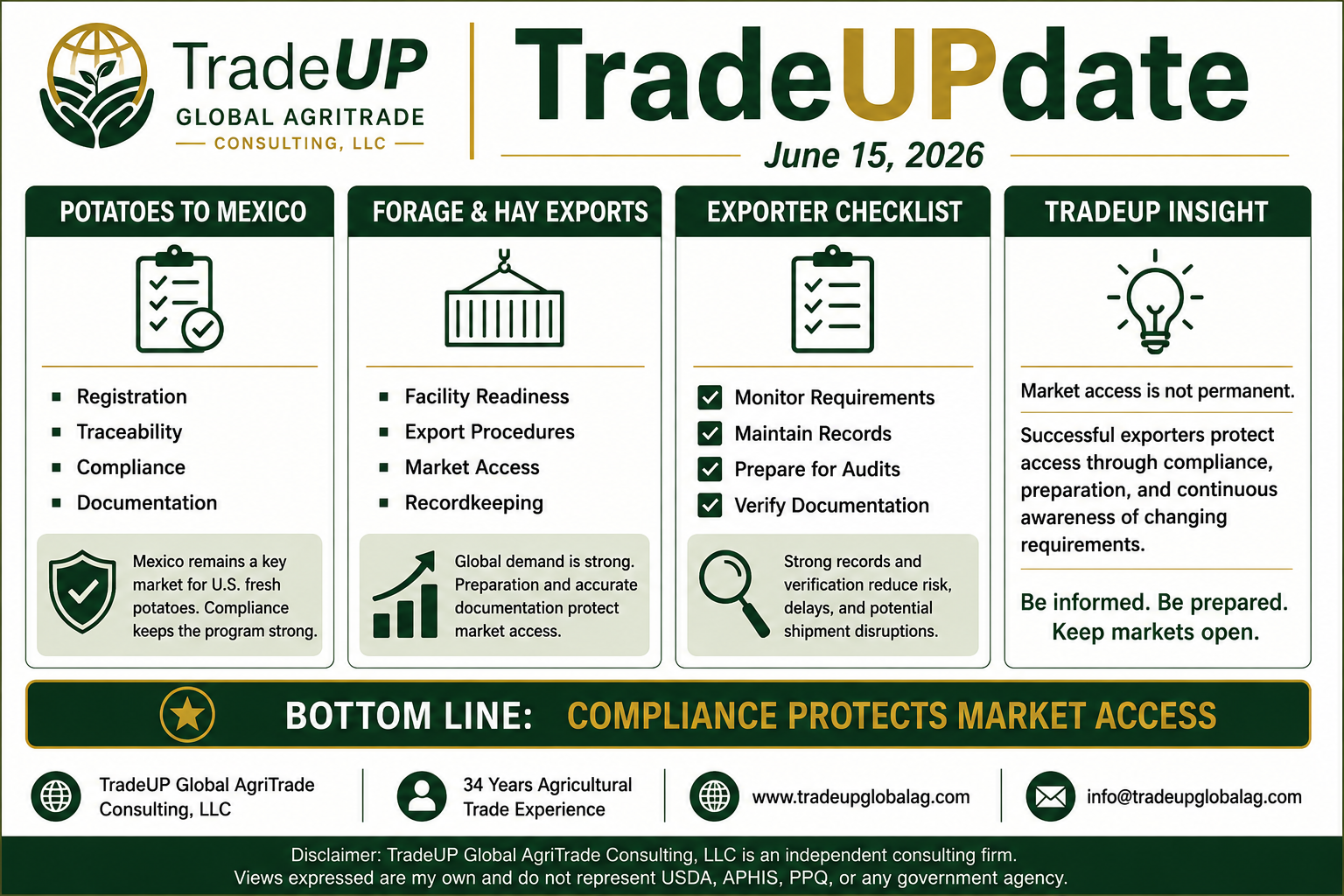
Potatoes to Mexico: Compliance Remains Essential
Mexico remains one of the most important export markets for U.S. fresh potatoes. Growers, shippers, and packing facilities participating in the export program must continue to maintain compliance with registration, traceability, and phytosanitary requirements established under the bilateral program.
As exports continue to move throughout Mexico, maintaining confidence in the program depends on consistent adherence to established requirements by all participants.
Forage and Hay Exports: Market Access Requires Preparation
International demand for U.S. forage products remains strong, particularly in markets that rely on imported feed products to support dairy and livestock production.
Exporters should ensure facility registrations, supporting documentation, and export procedures remain current and aligned with importing country requirements. Proactive preparation can help avoid costly delays and disruptions.
Big Picture
Successful exporters continue to focus on:
• Understanding importing country requirements.
• Maintaining accurate records and traceability.
• Preparing for audits, inspections, and verification activities.
• Monitoring regulatory updates that could affect market access.
TradeUP Perspective
One lesson from agricultural trade is clear: market access is not permanent. It must be protected through compliance, communication, and continuous attention to changing requirements.
The companies that invest in readiness today are often the ones best positioned to capitalize on opportunities tomorrow.
Bottom Line:
In agricultural trade, compliance is not just paperwork—it is the foundation of market access.